

A story
The photochrom process
Before color film was ordinary, a Zurich printer could turn a black-and-white negative into a color lithograph. Detroit bought the American license. The bright old views in the shop are that process.
Color from a black-and-white negative
Photochrom is a printing process, not a kind of film. In the 1880s Hans Jakob Schmid, working at the printing house Orell Füssli in Zurich, worked out a way to make a colored picture from an ordinary black-and-white photographic negative. The negative was used to put an image onto lithographic limestone. A separate stone carried each color. Printers built the picture the way they built any fine lithograph, layer by layer, with the photograph keeping the drawing honest. The result looks, at a glance, like a color photograph. Up close it is ink.
The look is the giveaway once you know it. Skies are smooth. Stone walls hold a warm tint. Water becomes a clear blue that no stained glass plate of the 1890s was reliably giving a publisher. People bought them as souvenirs and as parlor pictures. Railroads and hotels loved them, because a black-and-white photograph of a resort asked the viewer to imagine the weather, and a photochrom handed the weather over.
Detroit buys the American license
The Detroit Photographic Company, later the Detroit Publishing Company, licensed photochrom for the United States. William Henry Jackson, already famous for his survey photographs of the Yellowstone country, became part of the firm and fed it negatives from a long career of pointing a camera at American places. The Library of Congress ended up with a large Photochrom Print Collection from that work. A print in that collection will often carry the company's name and a small caption in the margin, the way a postcard does, because that is close to what these were.
The process mattered because the country was being sold to itself. A family in Ohio could own a colored view of a geyser, a hotel, or a civic building without traveling. The color was an interpretation. Somebody in the print shop decided that the awning was red and the sea was that particular blue. The underlying negative was a photograph. The stones were a printer's judgment. Both facts belong in the caption.
A roundup, a geyser, two hotels, a hall
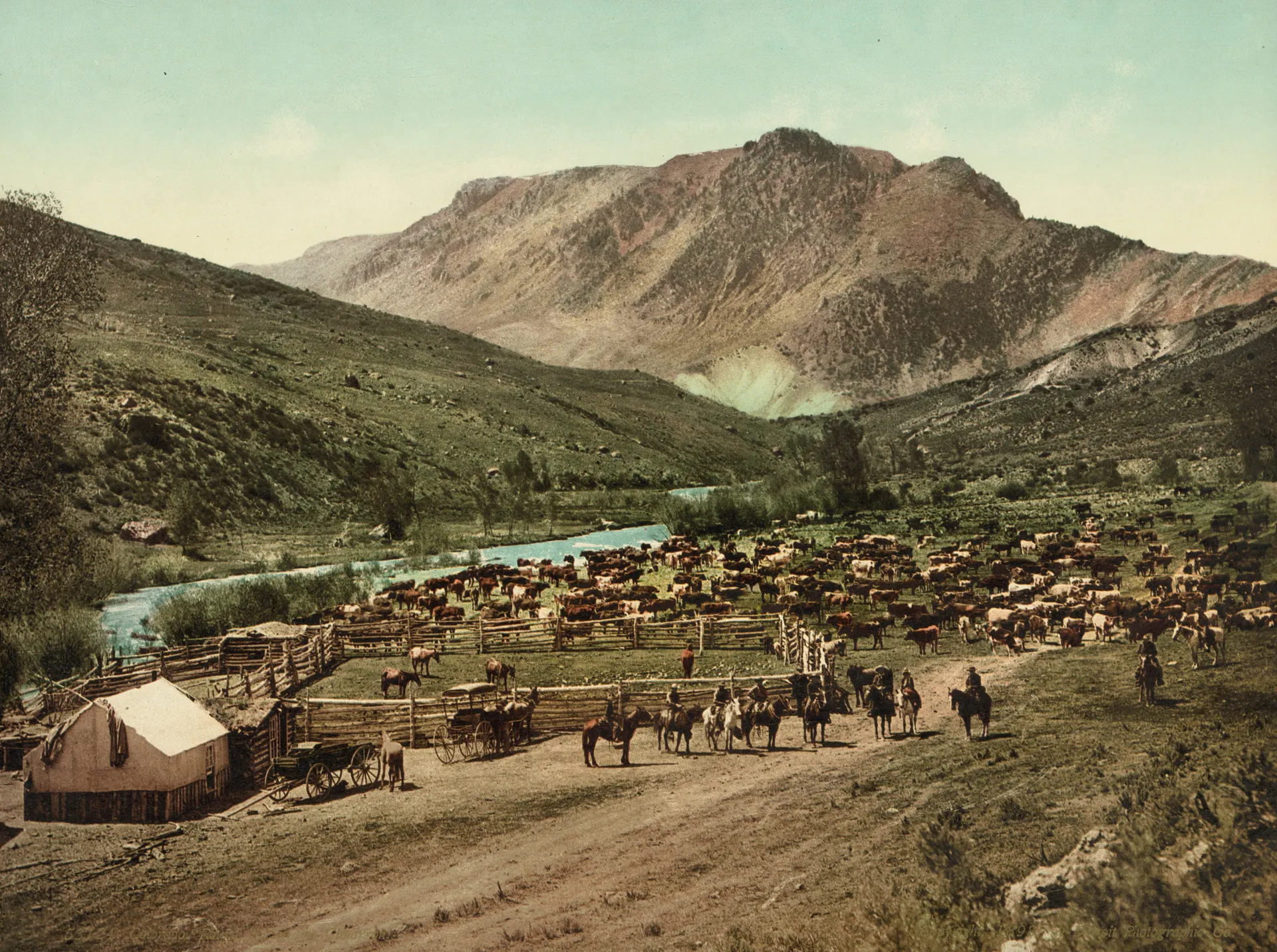
The picture that opens this story is a cattle camp on the Cimarron in Colorado, 1898. Riders, corrals, a wall tent, and chuck wagons sit in the foreground, and the herd fills a high valley behind them. Detroit Photographic made the color with the Swiss process. The Library of Congress files the print as item 2008678198 and marks it no known restrictions on publication. Spring and fall roundups were how neighboring outfits gathered cattle for branding and sorting. The roping in a scene like this is the skill that later became a rodeo event. The photochrom makes the dust and the grass a color a magazine could print.
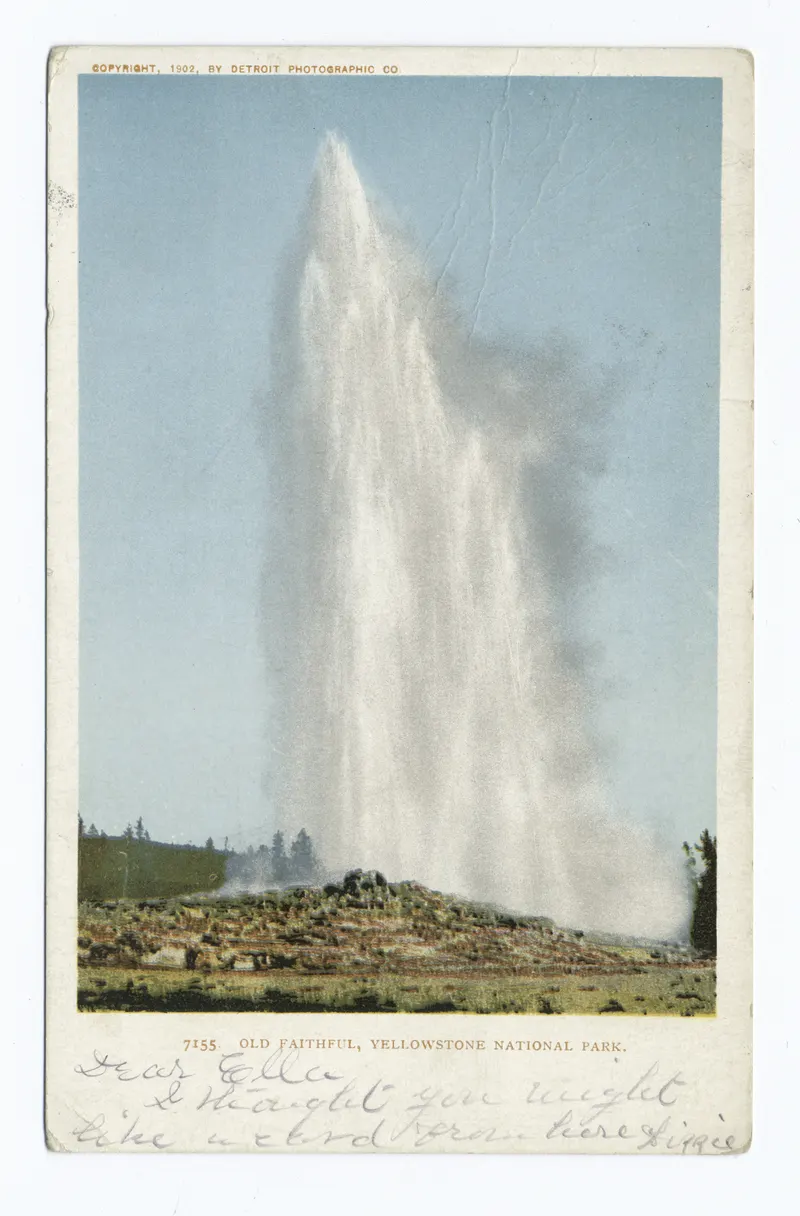
Old Faithful, a Detroit view from about 1904 now in the New York Public Library's Detroit Publishing holdings, does the same job for a geyser. Early park visitors had already turned Yellowstone into a tour. The plume is the subject, and the color is the printer's best memory of mineral water and steam. The interval people quote now, roughly ninety minutes between eruptions, is a modern average. The 1904 print cares about the column of water.
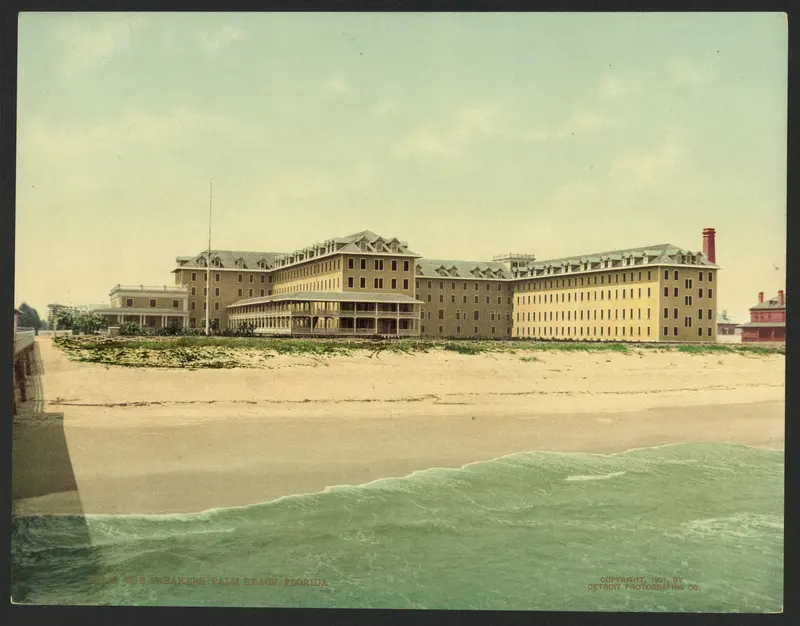
Two Florida hotels show the process working for business. The Breakers at Palm Beach, a 1901 photochrom, is Henry Flagler's oceanfront hotel a few years after it opened and shortly before the 1903 fire that forced a rebuilding. The Ponce de Leon at St. Augustine, a 1902 photochrom, is the Spanish Renaissance hotel Flagler opened in 1888, Carrère and Hastings as architects, in the oldest European-founded city in the country. Independence Hall in Philadelphia, about 1900, is the civic version of the same product: the room where the Declaration and the Constitution were signed, photographed by Detroit and issued in color so a parlor could hold it. Five subjects, one license, one idea. A black-and-white negative goes to Zurich's method, and comes back as a picture you can believe was always in color.
Shop the story

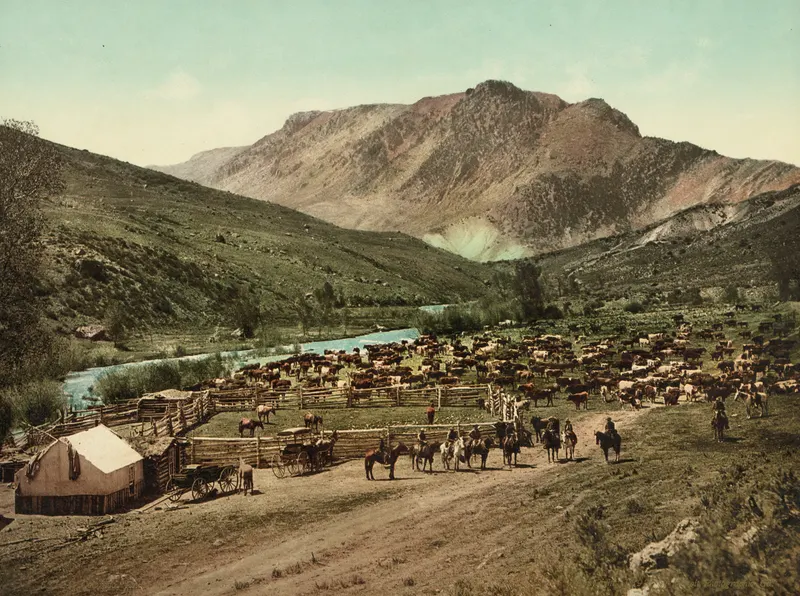
No. 273 · Cowboys & Rodeo
Round-Up on the Cimarron, Colorado, 1898
Photographed by Detroit Publishing Company
From $29

No. 181 · America's Parks
Old Faithful, Yellowstone c.1904
Photographed by Detroit Publishing Company
From $149

No. 057 · Your City
Palm Beach, 1901
Photographed by Detroit Publishing Company
From $29
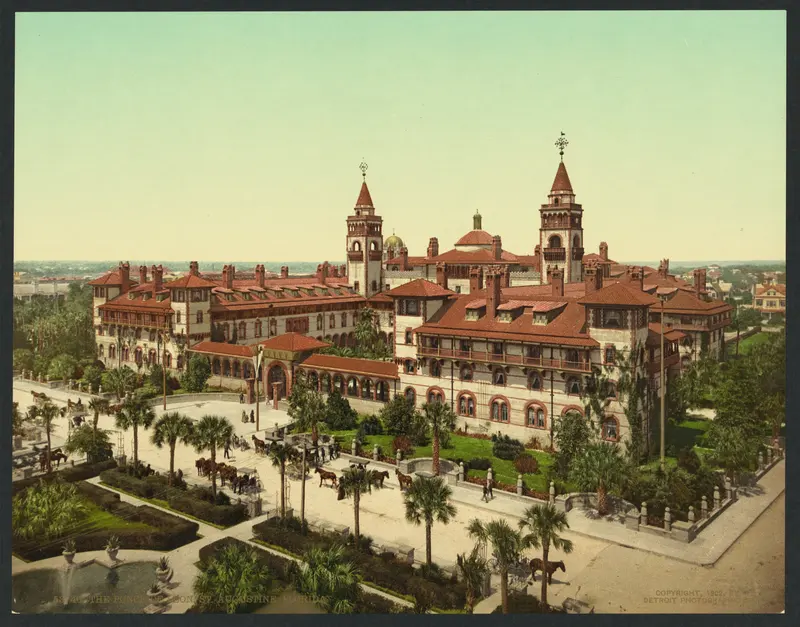
No. 060 · Your City
St. Augustine, 1902: The Ponce de Leon
Photographed by Detroit Publishing Company
From $29
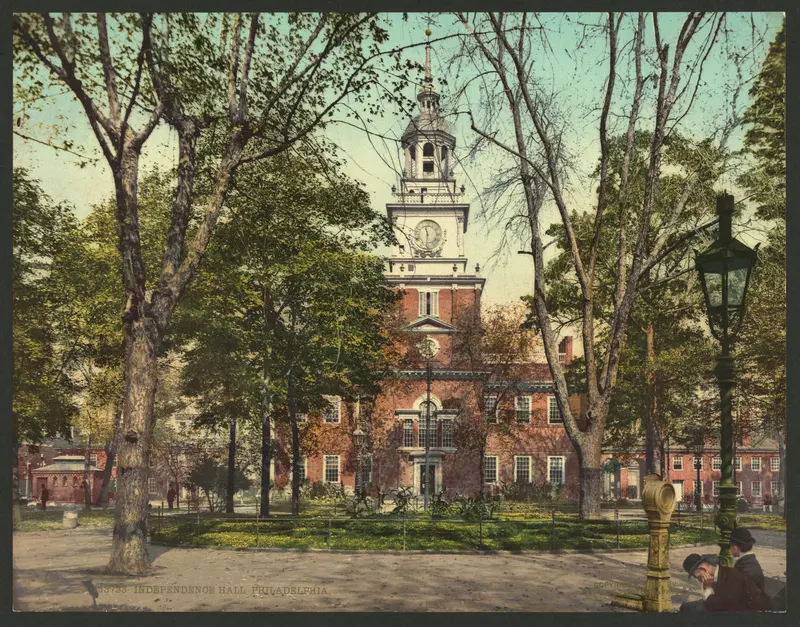
No. 063 · Your City
Philadelphia, 1900: Independence Hall
Photographed by Detroit Publishing Company
From $29
Sources
- Round-Up on the Cimarron, 1898, Photochrom Print Collection, Library of Congress item 2008678198
- Old Faithful, Yellowstone, about 1904, Detroit Publishing Company, New York Public Library
- The Breakers, Palm Beach, about 1901, Detroit Publishing Company photochrom
- The Ponce de Leon, St. Augustine, about 1902, Detroit Publishing Company photochrom
- Independence Hall, Philadelphia, about 1900, Library of Congress LCCN 2008679522