

A story
A clown, a show, a rider
Three ways the West was pictured for a crowd: Russell Lee's 1940 photograph of a spectator at the San Angelo Fat Stock Show, an 1898 Pawnee Bill poster, and Frank Tenney Johnson's 1924 painting of a Pony Express rider.
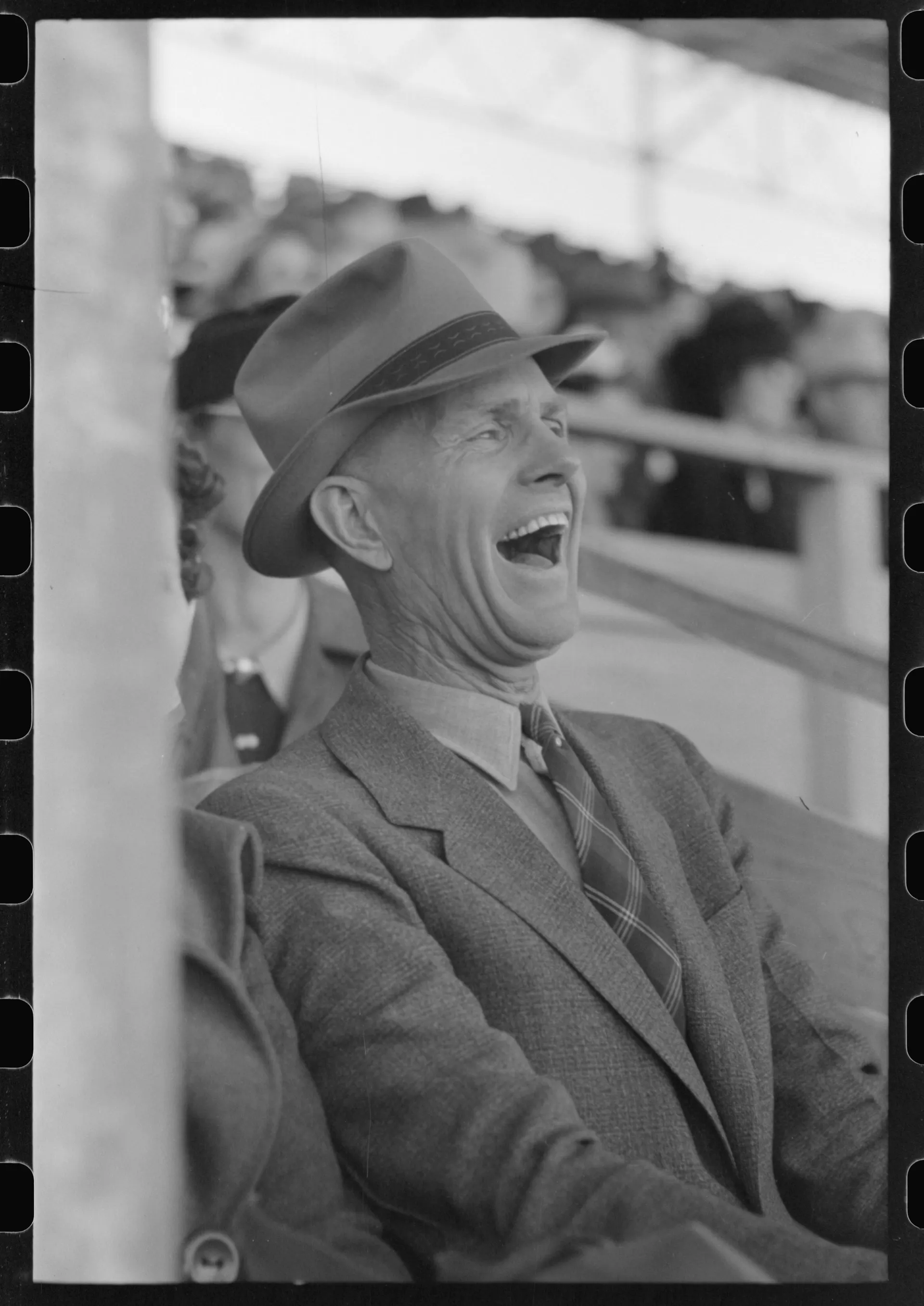
The laugh in the stands
The Rodeo Clown Gets a Laugh is Library of Congress item 2017741829, Farm Security Administration / Office of War Information, 1940, San Angelo, Texas. The credit says no known restrictions, and that it is a U.S. government photograph from the FSA/OWI file. The story on the piece says Lee turned his camera away from the arena and onto the crowd: one spectator in stitches at a cowboy clown at the San Angelo Fat Stock Show.
The subject is the spectator. The clown is the reason the face is doing what it is doing. A rodeo picture that stays in the stands is still a rodeo picture. The date and the town are on the record.
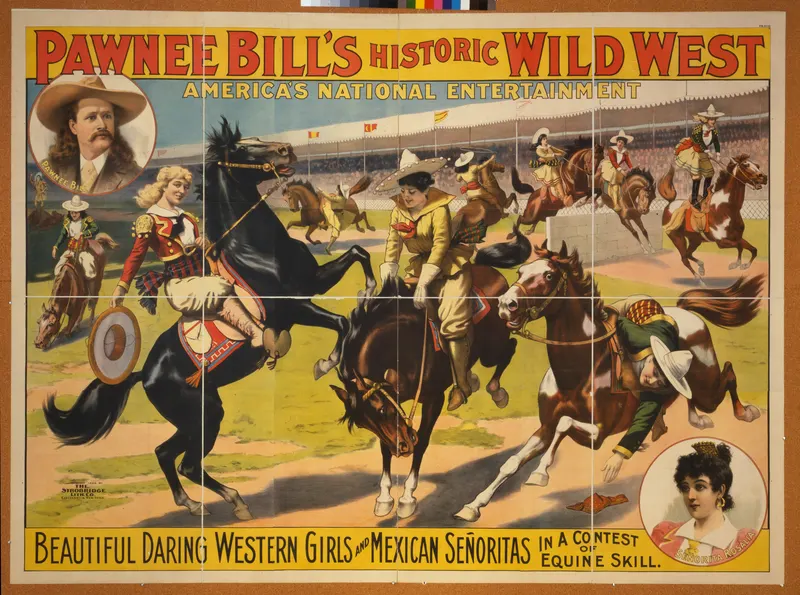
Pawnee Bill's Western Girls
The poster is dated 1898. The Library of Congress control number on the piece is LCCN 2002719103. The credit says public domain, no known restrictions. The story says Pawnee Bill's wife May Lillie was a champion sharpshooter and rider, and that the show billed its women riders as headliners. It says that was rare star billing for women in the 1890s.
The object is a poster, not a photograph of a performance. The billing is the fact the piece records: women riders named as the attraction. The title on the print is Pawnee Bill's Western Girls.
Johnson's rider, painted in 1924
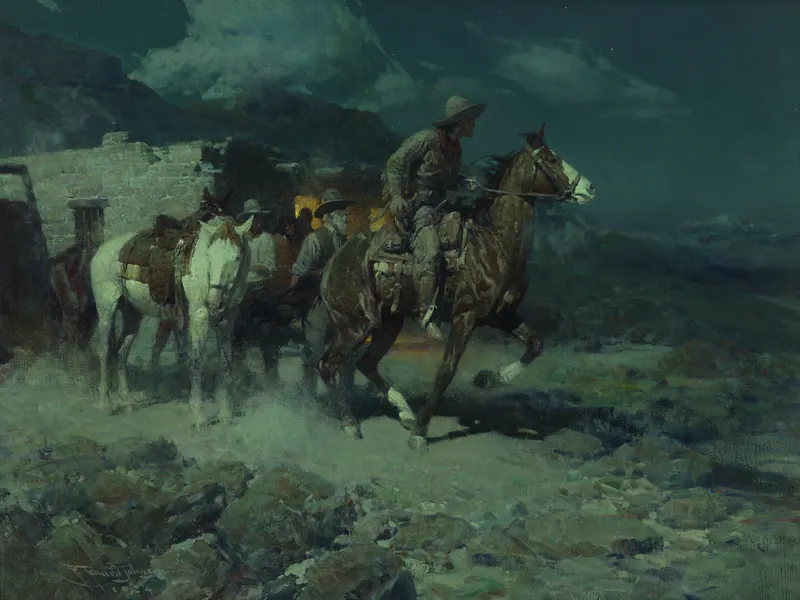
The Pony Express is a 1924 painting by Frank Tenney Johnson. The piece credits the Gilcrease Museum and a public-domain Commons file. The rights note says a 1924 work is in the public domain either because publication put it out of copyright at the end of 2019 or, if it was unpublished, because Johnson died in 1939 and the term ran seventy years, to 2009. The story says the Pony Express lasted just eighteen months, 1860 to 1861, before the telegraph ended it, and that it became one of the West's biggest legends. It says Johnson, a former cowpuncher, painted the rider in his dusky light.
The painting is sixty-three years after the mail service it depicts. That gap is the point of hanging it with a poster and a Farm Security photograph. One is a show bill from 1898. One is a 1924 memory of 1860. One is a man laughing in San Angelo in 1940. None of them is the roundup photograph already told in another story. The Library, the Gilcrease file, and the Commons credits are the sources.
Lee's picture is item 2017741829. The FSA/OWI credit is a government photograph, which is why the rights line can be short. The town is San Angelo and the event, on the piece, is the Fat Stock Show. Pawnee Bill's poster carries LCCN 2002719103 and the year 1898. May Lillie is named on the product as his wife, a champion sharpshooter and rider, and the piece says the women riders were billed as headliners. Johnson's canvas is 1924, Gilcrease Museum, and the rights note walks through both paths to the public domain so a buyer is not left guessing about a work from that year.
A roundup on the Cimarron, already printed and already given its own essay, is the photograph of work. These three are the West as an audience saw it: a laugh in the stands, a lithographed bill, and a painter who had been a cowpuncher making a legend sixty-three years late. The pieces do not claim to be the same kind of object. The wall should not pretend they are.
Shop the story

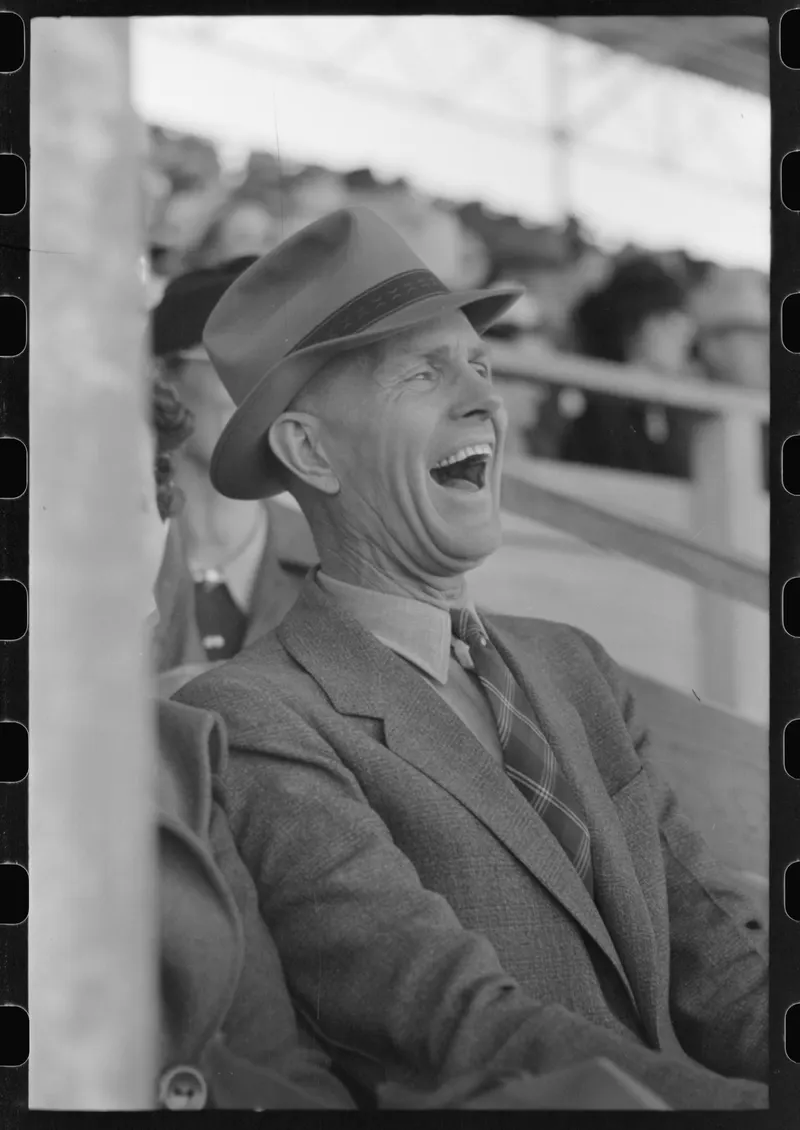
No. 219 · Candid & Wit
The Rodeo Clown Gets a Laugh, 1940 (Russell Lee)
Photographed by Russell Lee
From $34
No. 249 · Wild West Show Posters
Pawnee Bill's Western Girls, 1898
Studio lithograph
From $29
No. 262 · Cowboys & Rodeo
The Pony Express, Frank Tenney Johnson, 1924
Painted by Frank Tenney Johnson
From $29

