

A story
The words on the wall
Some pictures in the shop are the words themselves. Lincoln at Gettysburg, Lincoln at the second inaugural, the Cabinet hearing a proclamation, a typed page from 1933, and a stadium in Houston in 1962.
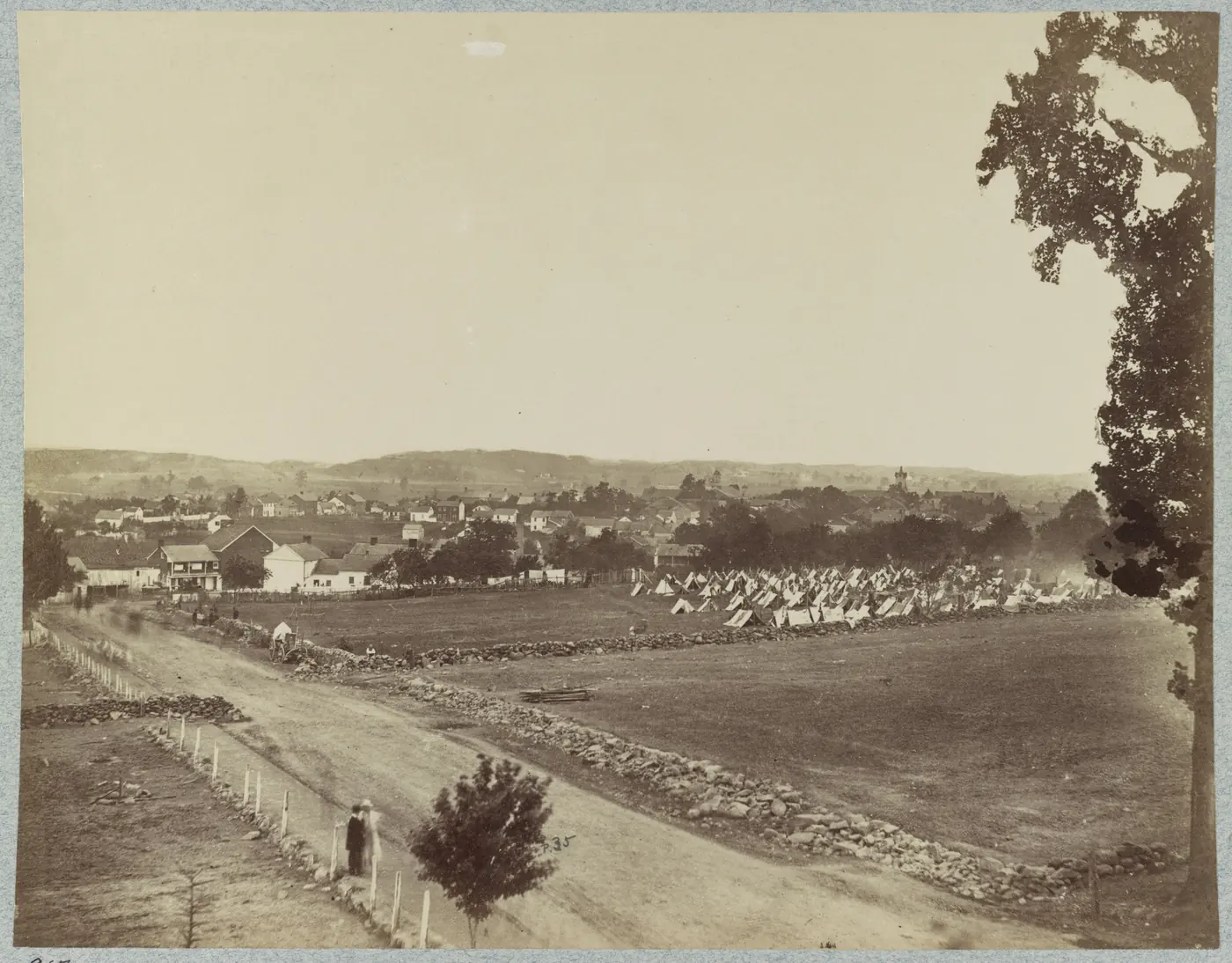
Two minutes in November
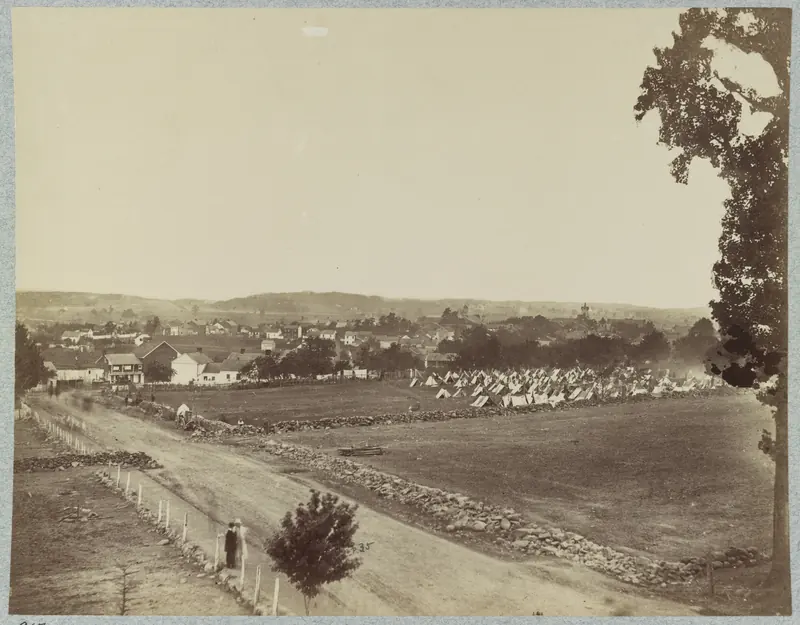
On November 19, 1863, Abraham Lincoln dedicated the Soldiers' National Cemetery at Gettysburg. The speech was about two minutes, and the Bliss copy, the manuscript version most often printed, runs 272 words. He asked the living to finish the work of the dead, so that government of the people, by the people, for the people, shall not perish from the earth. The sentence is his. It is on the print because it is on the page.
The portrait paired with it was made eleven days earlier. On November 8, 1863, Alexander Gardner photographed Lincoln in Washington, a seated portrait, the president a week and a half away from the cemetery. The Library of Congress files that Sunday sitting. The speech and the face are two objects from the same fortnight. One is a manuscript. One is a glass-plate likeness. The shop puts them in a single frame so the words have the man, and the man has the date.
Malice toward none
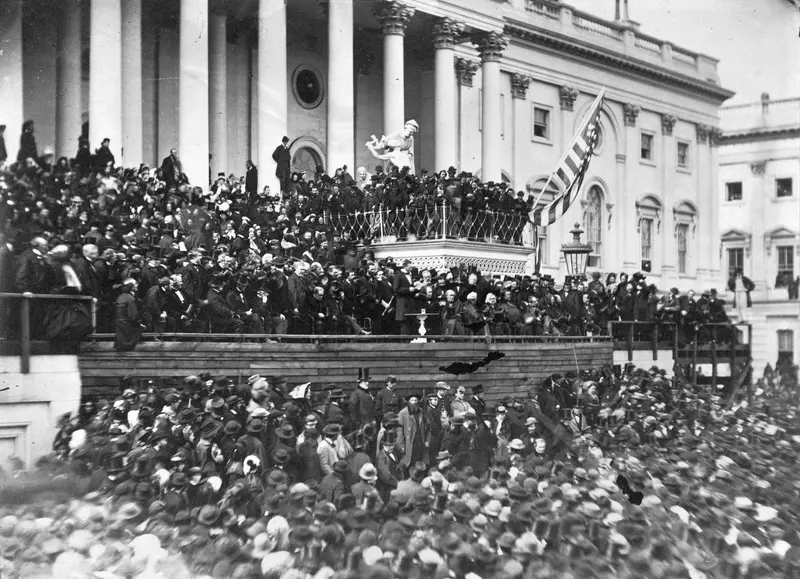
On March 4, 1865, Lincoln delivered his second inaugural from the East Front of the Capitol, the dome finished at last, the war not quite over. Alexander Gardner photographed the scene: a small figure under the portico, a crowd, the building as the real subject if you step back. The speech's best-known sentence is the one the print is titled for. With malice toward none, with charity for all. He was arguing for a peace that would not be a punishment. Six weeks later he was dead. The photograph is the afternoon of the speech.
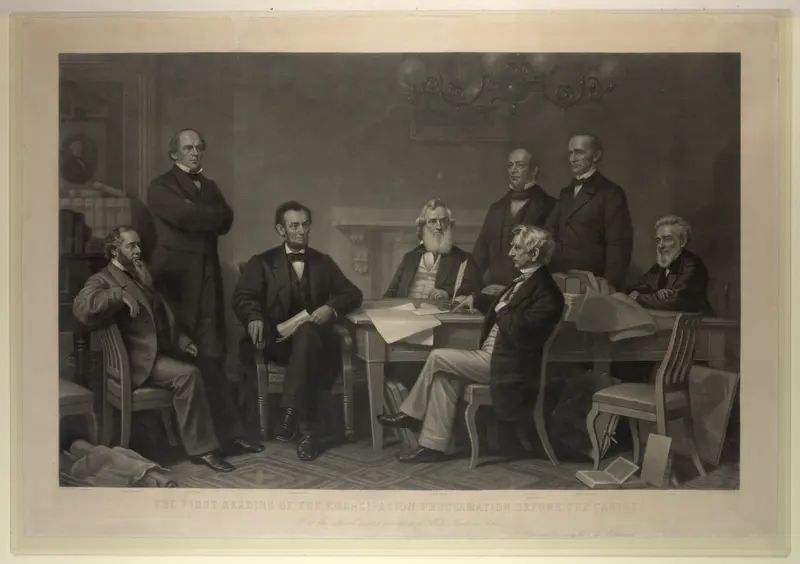
The Emancipation picture reaches further back, to July 22, 1862, when Lincoln read a draft of the proclamation to his Cabinet. Francis Bicknell Carpenter painted that reading in 1864, working in the White House so he could get the faces. A. H. Ritchie engraved the painting in 1866, and the Library of Congress holds the engraving, LCCN 2012648844. The date on the plate is the date of the meeting, not the date of the engraving. Preliminary emancipation came on September 22, 1862. The January 1, 1863, proclamation is the one that freed people in the states in rebellion. The engraving is the July reading, a room, a paper, a cabinet. Carpenter arranged it. Ritchie cut it. Lincoln had already said it.
A typed page, and a stadium
On March 4, 1933, Franklin Roosevelt took the oath and told a country in the depth of the Depression that the only thing we have to fear is fear itself. The shop's picture is not a photograph of the crowd. It is page one of the typed reading copy, from the National Archives, file 197412. You can see the typewriter. You can see the sentence. A document print is a different object from a portrait, and this one wants to be read, which means it wants to be hung where a person can stand still. The fear line is in the first paragraph. The rest of the page is the speech getting started.
On September 12, 1962, John F. Kennedy spoke at Rice Stadium in Houston and committed the country to the Moon. The line the picture is built around is his: we choose to go to the Moon in this decade and do the other things, not because they are easy, but because they are hard. NASA's photograph shows him at the lectern, the stadium behind him, a bright Texas day. The speech is a year and change before his death, and seven years before Armstrong's picture of Aldrin. Hang the Rice photograph near a lunar print and the sentence has somewhere to land.
Five pieces, all of them words with a body. Gardner's November 8 portrait and the Bliss text. Gardner's March 4, 1865, crowd. Ritchie's engraving of a Cabinet. The Archives' typed page from March 4, 1933. Kennedy at Rice. Quote them as written. The sources below are the files. A wall of speeches works when the type is large enough to read and the faces are large enough to know. That is the whole design.
Shop the story

No. 001 · Great Speeches
The Gettysburg Address
Photographed by Alexander Gardner
From $29
No. 049 · Great Speeches
With Malice Toward None
Photographed by Alexander Gardner
From $34
No. 048 · Great Speeches
First Reading of the Emancipation Proclamation
Engraved by Alexander Hay Ritchie, after F. B. Carpenter
From $34
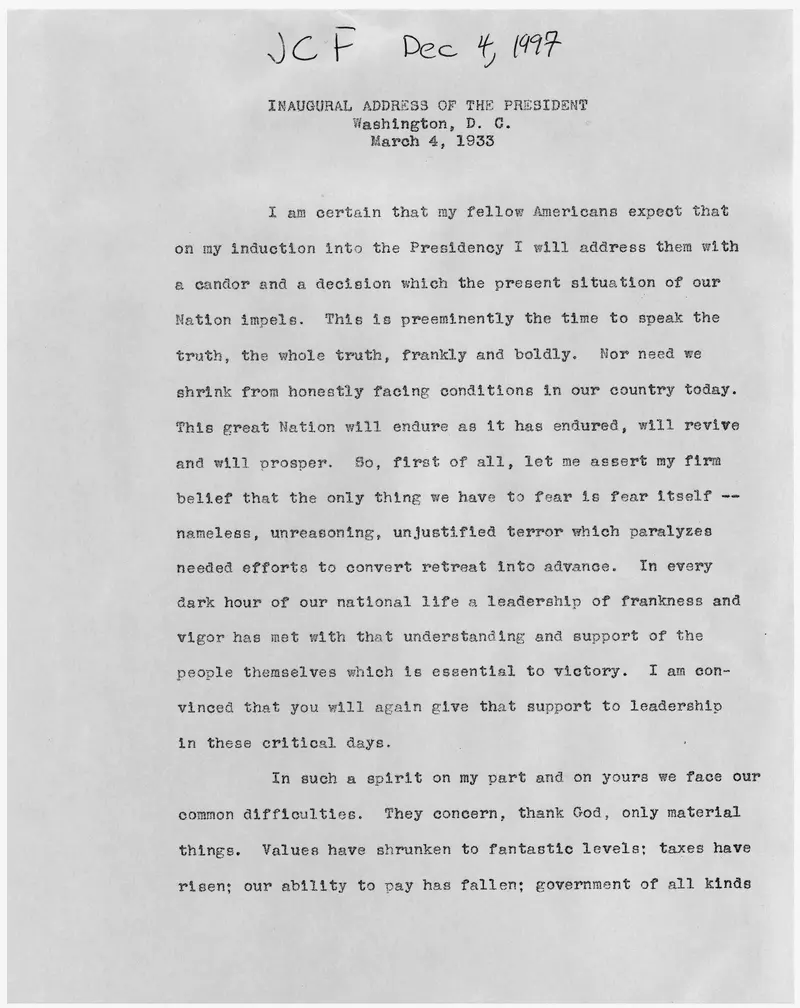
No. 053 · Great Speeches
Nothing to Fear
Source: National Archives (NARA)
From $149
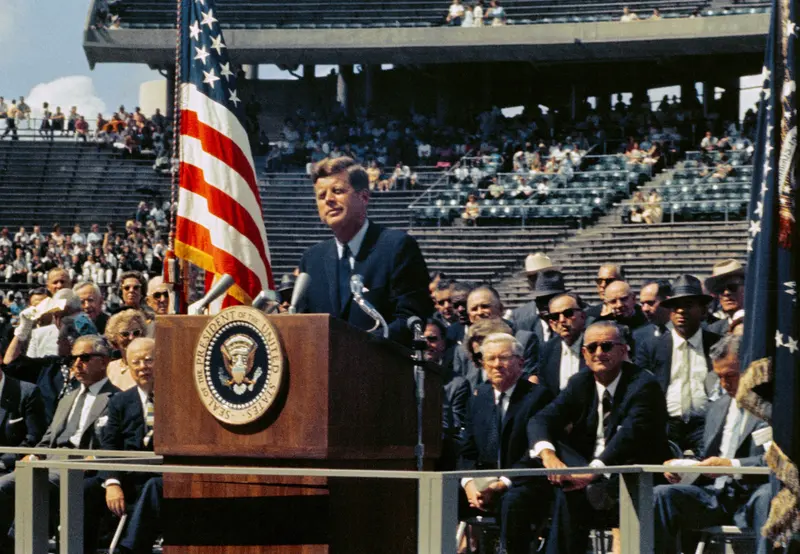
No. 054 · Great Speeches
We Choose to Go to the Moon
Source: NASA
From $34
Sources
- Alexander Gardner, Abraham Lincoln, November 8, 1863, Library of Congress item 2008680252. The address is the Bliss copy, November 19, 1863
- Alexander Gardner, Lincoln's second inaugural, March 4, 1865, Library of Congress
- A. H. Ritchie after F. B. Carpenter, First Reading of the Emancipation Proclamation, engraving 1866, Library of Congress LCCN 2012648844
- First page of Franklin Roosevelt's inaugural address, March 4, 1933, National Archives 197412
- John F. Kennedy at Rice Stadium, Houston, September 12, 1962, NASA

