A story
Sherman, and the figure leading him
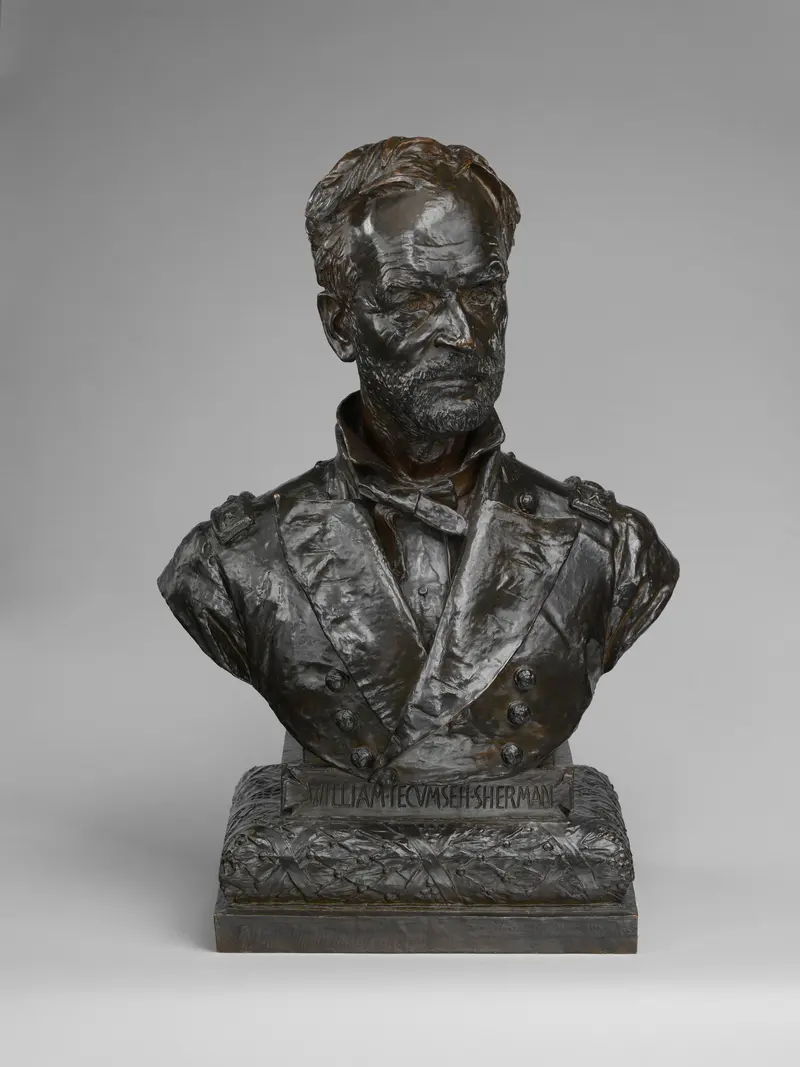
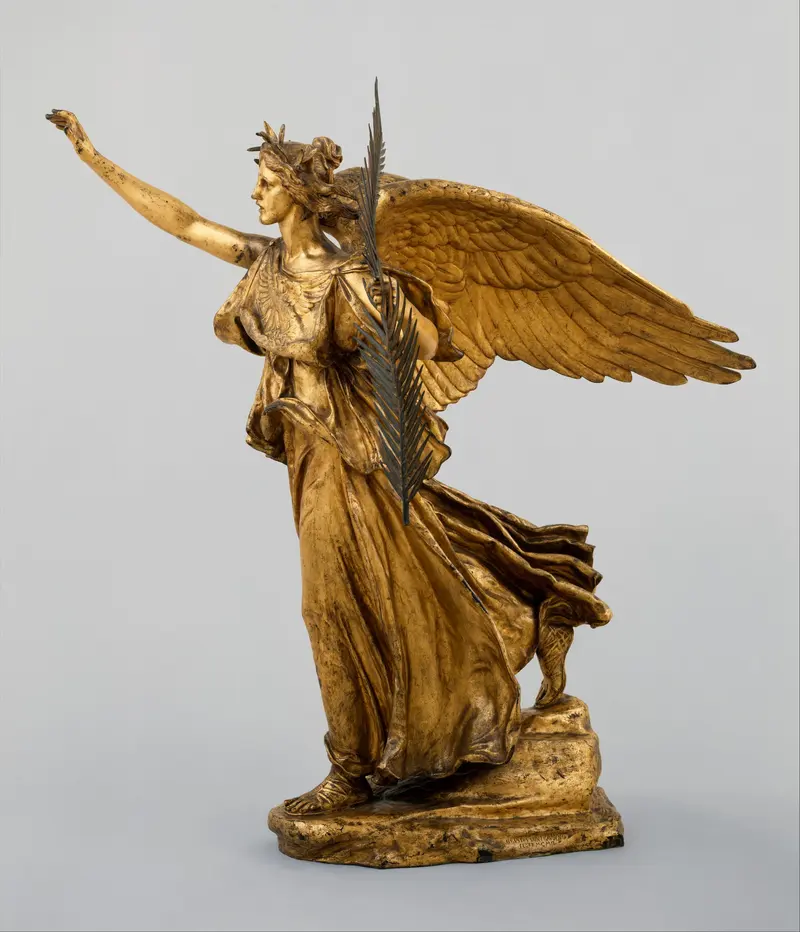
Augustus Saint-Gaudens' monument to General William Tecumseh Sherman was unveiled in 1903 and still stands in Grand Army Plaza. The shop's two bronzes are the Met's bust of Sherman and its gilt Victory, the winged figure Hettie Anderson modeled.
The monument in the plaza
Saint-Gaudens National Historical Park says the monument to General William Tecumseh Sherman was unveiled in 1903 and still stands in New York City's Grand Army Plaza. Smaller recastings of certain elements, including a bust of the general and the winged figure of Victory, are in the park's own collection. The park's guide to the sculptor calls the Sherman Monument one of the public works in New York's Central Park, with the winged Victory leading Sherman. The process page places the same unveiled group in Grand Army Plaza. The two sentences are the same monument.
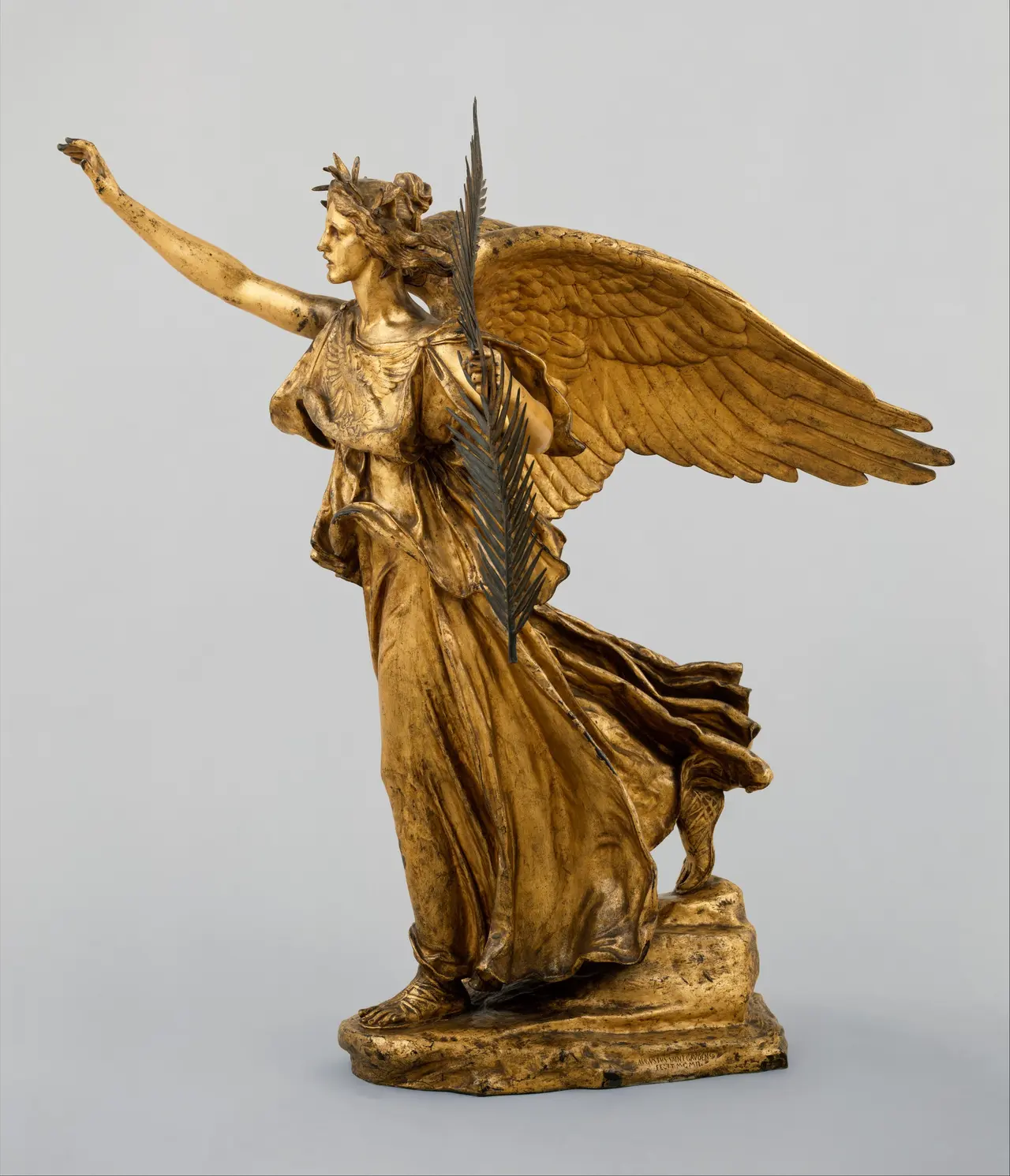
The National Park Service's page on Hettie Anderson says Saint-Gaudens described her as the "handsomest model" he had ever seen, and that her likeness was used for the Winged Victory of the Sherman Monument. The same page says that design later shaped the Liberty on his twenty-dollar gold coin, which he made when Theodore Roosevelt asked him for new coins. Census records from South Carolina, the page says, described Anderson and her mother as "mulatto," and later New York census records described them as "white." The Park Service says it is unclear how she identified herself, and that Saint-Gaudens seemed to know of her Black ancestry. When the modeling work faded she took a job as a classroom attendant at the Metropolitan Museum. By then the museum already owned Saint-Gaudens casts, including a Victory. The same page gives her birth as 1873 in Columbia, South Carolina, and her death as January 10, 1938, in New York City. She lived in New York until that year. The page says it is not known whether she told her coworkers that the Victory was her face.
Two objects, two accession numbers
The bust in the shop is not the equestrian group. The Met's Open Access record, object 12021, accession 12.76.2, is public domain. The title is General William Tecumseh Sherman. Saint-Gaudens modeled it in 1888. This bronze was cast in 1910. It measures 31 1/4 by 21 1/2 by 12 1/2 inches. The credit is a gift by subscription through the Saint-Gaudens Memorial Committee, 1912. The department is The American Wing. The object name is Bust.
The Victory is object 12019, accession 17.90.1, also public domain. The date line reads 1892–1903, and this cast 1914 or after, by 1916. The medium is bronze, gilt. It stands 38 by 9 1/2 by 18 1/2 inches. Rogers Fund, 1917. Gallery 771. The museum tags the figure with eagles and with Victory. Saint-Gaudens' life dates on both records are the same: American, Dublin 1848–1907 Cornish, New Hampshire. The Park Service gives March 1, 1848, and August 3, 1907.
Read the pair as the monument's two ideas, kept at the scale of a room. The bust is the 1888 portrait, cast in 1910. The gilt figure is the Victory modeled across 1892–1903, cast by 1916, the face the Park Service ties to Hettie Anderson. The equestrian group itself remains outdoors in Grand Army Plaza, unveiled in 1903. The park's guide describes that group as Victory leading a resolute Sherman on the march to the sea, and it counts the monument among the public works that made Saint-Gaudens' name after the Farragut unveiling of 1881. He completed more than 150 works in the quarter century that followed. These two prints are not that outdoor group. They are the museum's bronzes, with their own accession numbers, and both Open Access records mark them public domain. The park in Cornish keeps its own smaller casts of those same two ideas.