A story
Harlem jazz, Minton's and the Downbeat
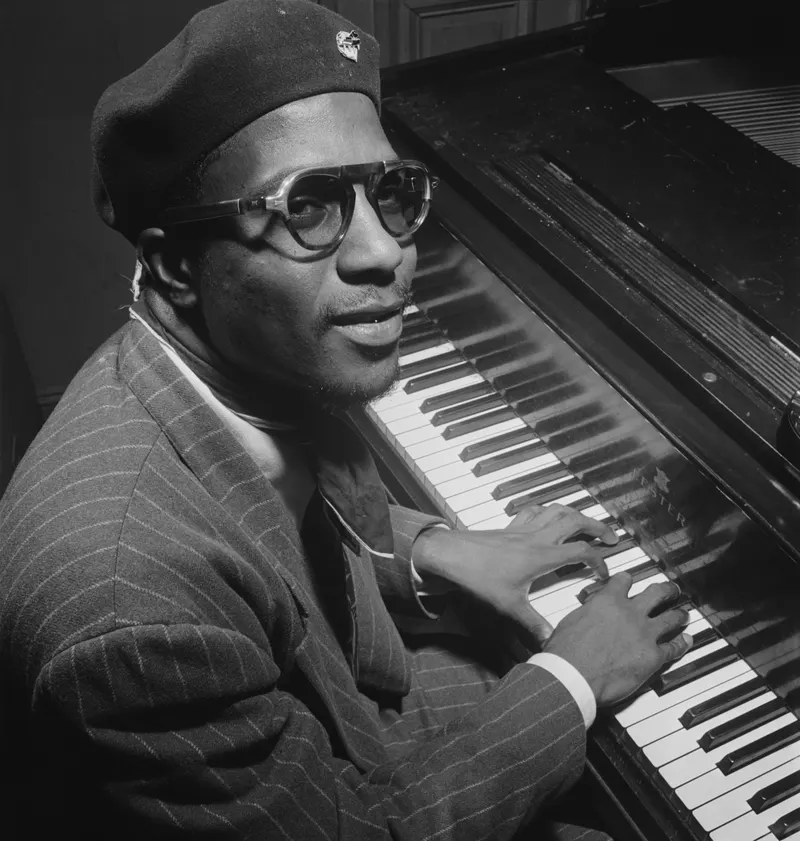
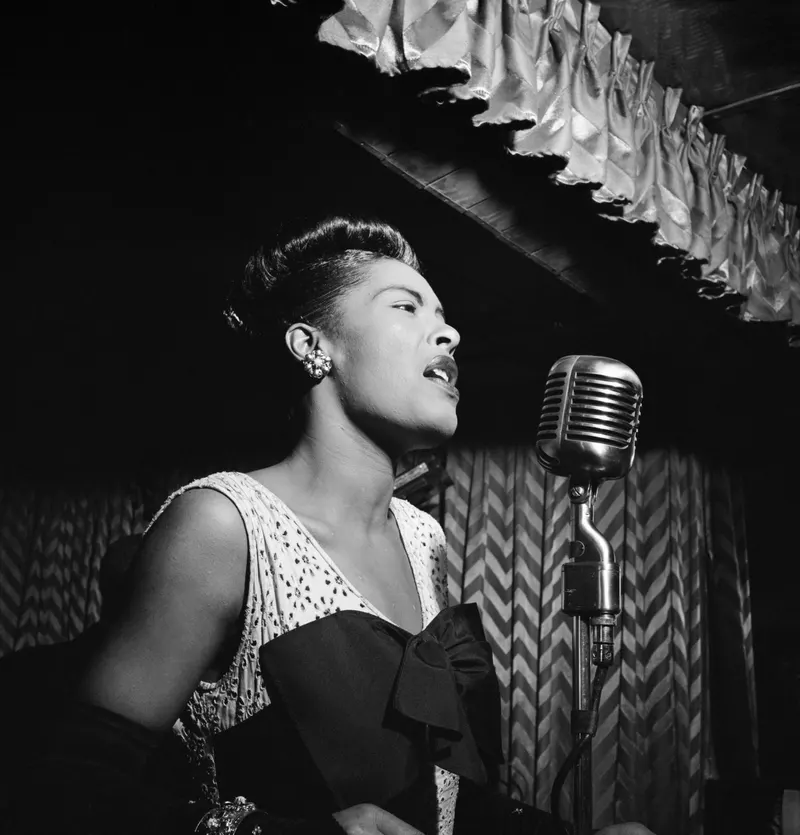
William P. Gottlieb photographed Thelonious Monk at Minton's Playhouse around September 1947, and Billie Holiday at the Downbeat club around February of that year. He later gave the pictures to the public.
A room on 118th Street
Minton's Playhouse stood at 210 West 118th Street in Harlem, in the Hotel Cecil. Henry Minton, a tenor saxophonist and a union official, opened the room. In the early 1940s, after Teddy Hill took over the bandstand, the after-hours sessions there became one of the places bebop was worked out in public. Thelonious Monk was the house pianist. Kenny Clarke was on the drums. Charlie Christian, Dizzy Gillespie, and Charlie Parker sat in. The music was fast, harmonically rude to anyone who had come for a standard played straight, and it was a night job. People had day instruments and night instruments. Minton's was the night.
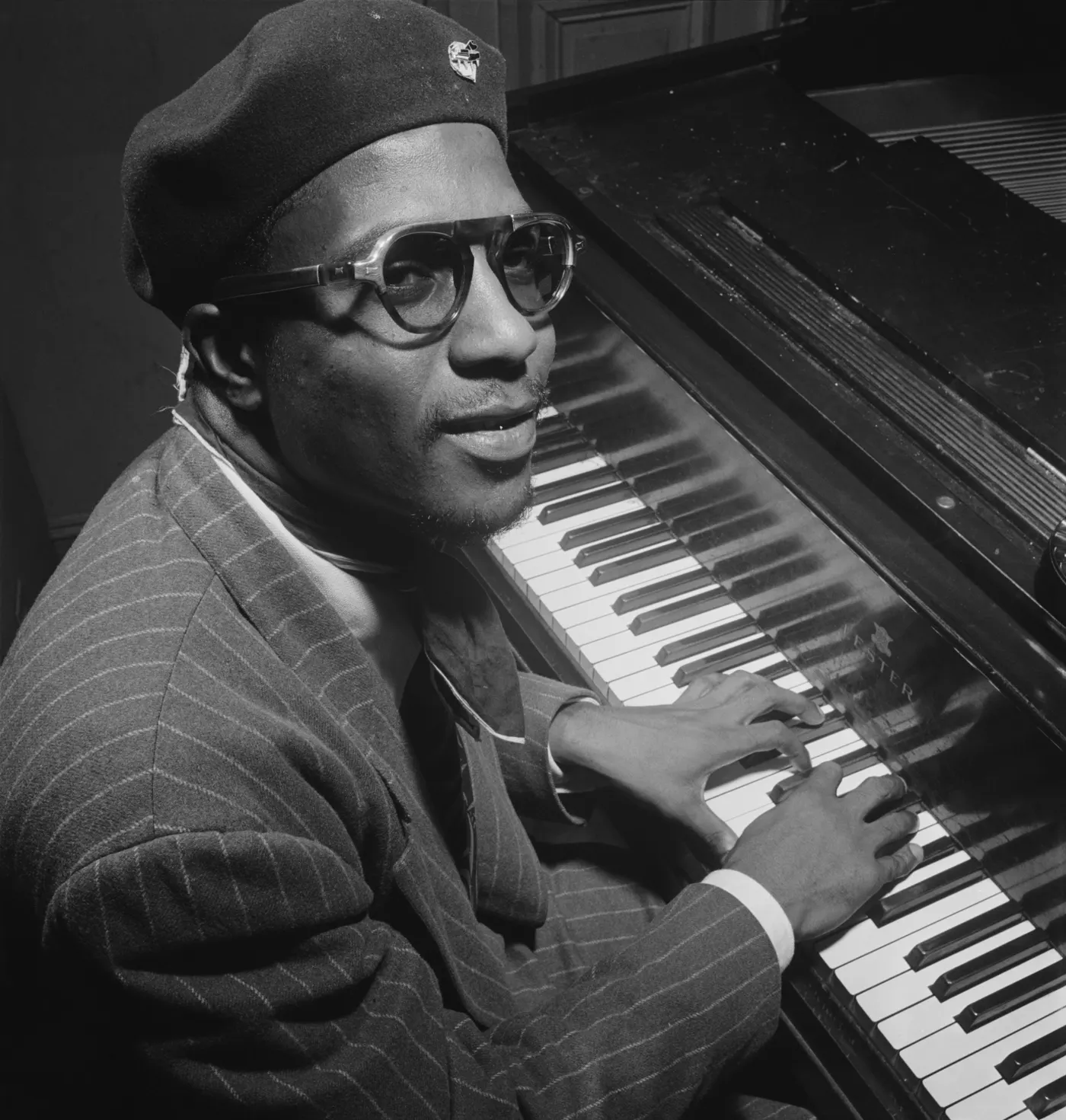
William P. Gottlieb's photograph of Monk is dated about September 1947. Monk is at the piano in that room. The Library of Congress holds the negative in the Gottlieb jazz collection. By 1947 the war was over, 52nd Street was full of clubs, and bebop had a name strangers recognized. The picture is late enough that the revolution was already a job, and early enough that Monk still looks like a man in his own house. He wears the concentration he always wore, the pause before a chord that nobody else was reaching for.
Holiday, the same year, a different club
Billie Holiday's picture is also Gottlieb, and it is also about 1947, and it is not Minton's. The Library of Congress dates it to about February 1947 and places it at the Downbeat club. She is at the microphone, the gardenia and the face and the light that Gottlieb was good at, a news photographer's light rather than a myth's. Her drug arrest came later that year. The photograph is the February job, a singer at work in a 52nd Street room, weeks on the calendar before the trouble the papers would print.
Keeping the two clubs straight matters, because Harlem and 52nd Street were different errands. Minton's was the laboratory uptown, a session that ran after the paying gigs. The Downbeat was a midtown club where a name on the awning sold the chairs. Holiday was the name. Monk, in Hill's band, was the house. Gottlieb worked both rooms with the same camera and the same patience, and the collection keeps the captions apart. Hang them as a pair of 1947, and say the places out loud.
A gift to the public domain
Gottlieb had been a writer and a photographer for the jazz press in the late 1930s and the 1940s, and he made a habit of asking musicians to let him shoot when the light was decent and the set was real. Late in his life the collection was dedicated to the public domain. In 2010 the Library of Congress made the photographs freely available, which is why a print of Monk at Minton's can be sold without renting the negative. The credit on the shop's pictures says so. The Library is the archive. Gottlieb is the photographer. The musicians are the subject.
Two frames are enough for this story, because each one is a specific room. Monk at Minton's, about September 1947, the pianist of the after-hours sessions that bent the music. Holiday at the Downbeat, about February 1947, a singer at a midtown microphone. The Gottlieb file at the Library of Congress is useful because he wrote the room and the approximate month on the sleeve. Minton's, about September 1947. The Downbeat, about February 1947. The sources below are those files. The rest of bebop is a long bookshelf. These two nights are a wall.