A story
Edmonia Lewis, carving Hiawatha
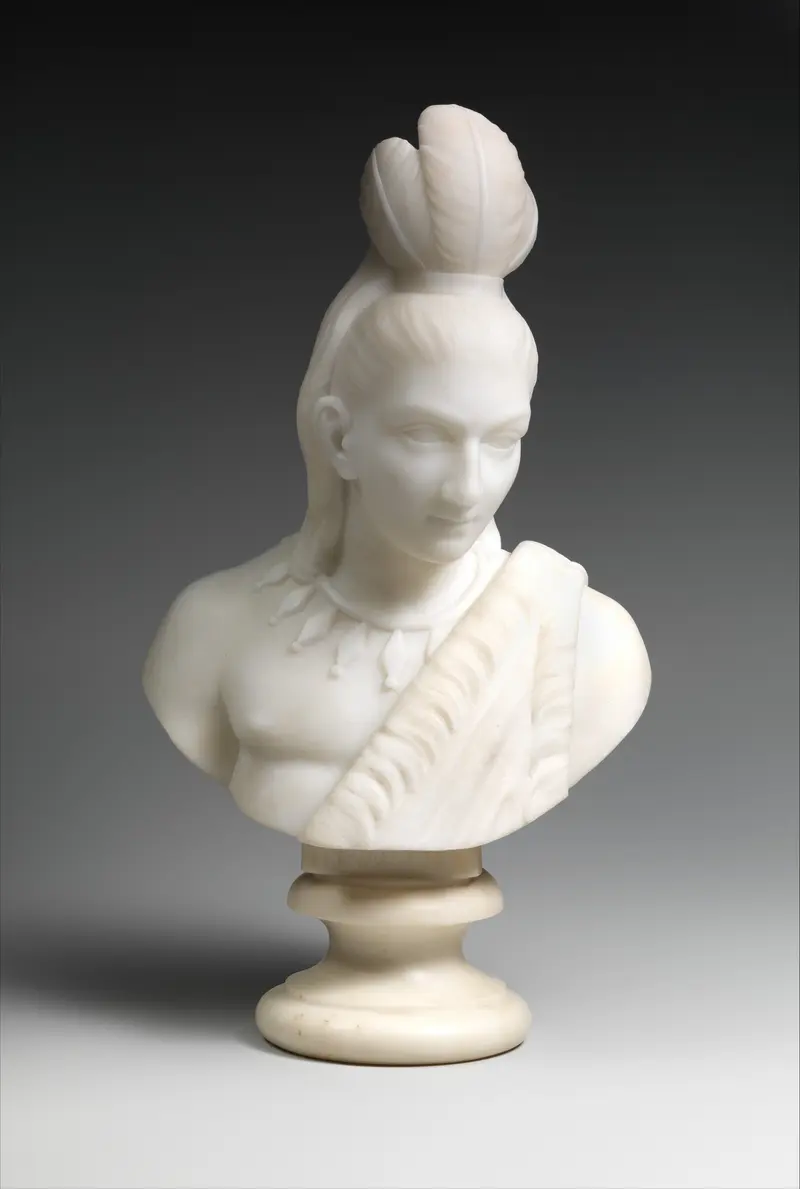
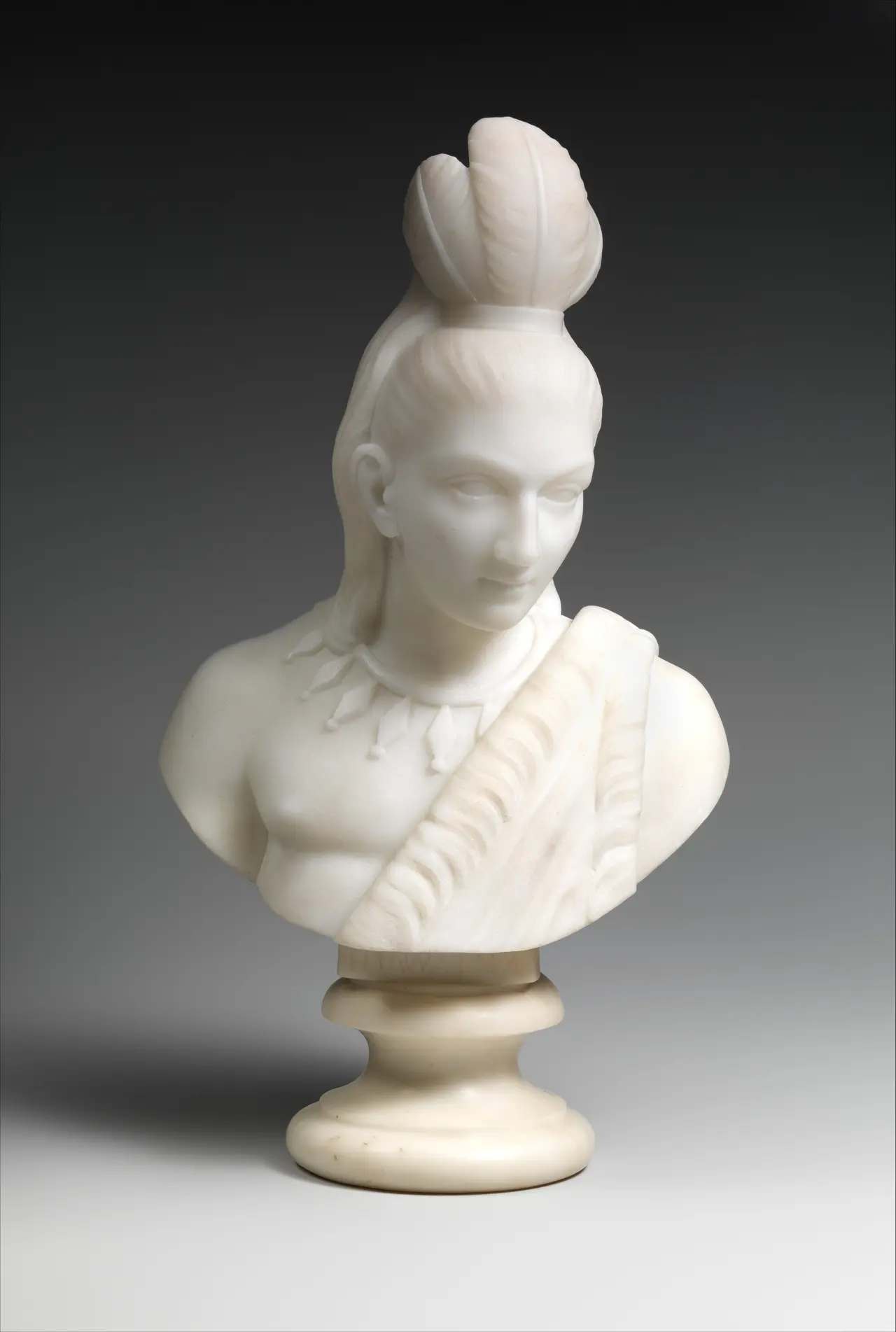
Edmonia Lewis carved the marble bust Hiawatha in Rome in 1868. The Metropolitan Museum records it at 13 3/4 inches. She did her own stonework, the Smithsonian writes, so the carving would be accepted as hers.
The sculptor
The Smithsonian American Art Museum's biography says Edmonia Lewis was the first sculptor of African American and Native American (Mississauga) descent to achieve international recognition. Her father was Black. Her mother was Chippewa (Ojibwa). The museum says she was born in Greenbush, now Rensselaer, New York, in 1844, and died in London in 1907. Orphaned early, she grew up in her mother's tribe. In 1859 she attended Oberlin College, one of the first schools to accept female and Black students. An accusation of poisoning, which the museum calls probably racially motivated, forced her to leave before graduating. She went to Boston, studied with a local sculptor, and made portraits of antislavery figures.
She moved to Rome in 1865 and worked in marble among a group of American women sculptors. The Smithsonian says sculptors usually hired local workmen to carve the final pieces, but Lewis did all her own stonework out of fear that if she did not, her work would not be accepted as original. Besides portrait heads, she carved biblical scenes and figures dealing with her Native American heritage and the oppression of Black people.
A bust made in Rome
The Metropolitan Museum's Open Access record, object 687670, is public domain. The title is Hiawatha. The artist is Edmonia Lewis, American, 1844–1907. The object date is 1868. The medium is marble. The dimensions are 13 3/4 by 7 3/4 by 5 1/2 inches. The museum's geography line says it was made in Rome, Italy. The accession number is 2015.287.1, Morris K. Jesup and Friends of the American Wing Funds, 2015. The object name is Bust. It is in The American Wing.
The Smithsonian also lists the name Wildfire with Mary Edmonia Lewis, and it places her working life in Boston, Oberlin, and Rome. The Roman years are the ones that match this object. She arrived in 1865. Hiawatha is dated 1868. The museum's sentence is worth keeping whole. Sculptors usually hired local workmen to carve their final pieces, but Lewis did all her own stonework out of fear that if she did not, her work would not be accepted as original. A bust of 13 3/4 inches is not a monument that needs a crew. It is a head. The usual Roman practice was to point up a model and let the workmen finish the marble. She did not work that way.
The Met's credit line is the 2015 purchase, Morris K. Jesup and Friends of the American Wing Funds, accession 2015.287.1. The record places the bust in gallery 731 and marks it a highlight of The American Wing. Public domain. The artist line on that label is only "American, 1844–1907," which is why the Smithsonian page has to carry Greenbush, Oberlin, Boston, Rome, and London. No poem is printed on the object record, and none is added here. The title Hiawatha is the title on the marble. The biography says figural works on her Native American heritage were part of what she carved in those Roman years. This bust is the one the museum holds. The sheet in the shop is a photograph of that marble, not a portrait of Lewis. The Smithsonian notes that a photograph of her exists, an albumen silver print by Henry Rocher from about 1870 at the National Portrait Gallery, but that picture is not this print. This print is Hiawatha, carved in 1868 in Rome, 13 3/4 inches, her own stonework.