

A story
The early speed kings
Barney Oldfield made a mile a minute famous, then kept racing into the 1920s. Tommy Milton won Indianapolis in 1921. The same summer a new police department in Maryland bought motorcycles to catch drivers like them.
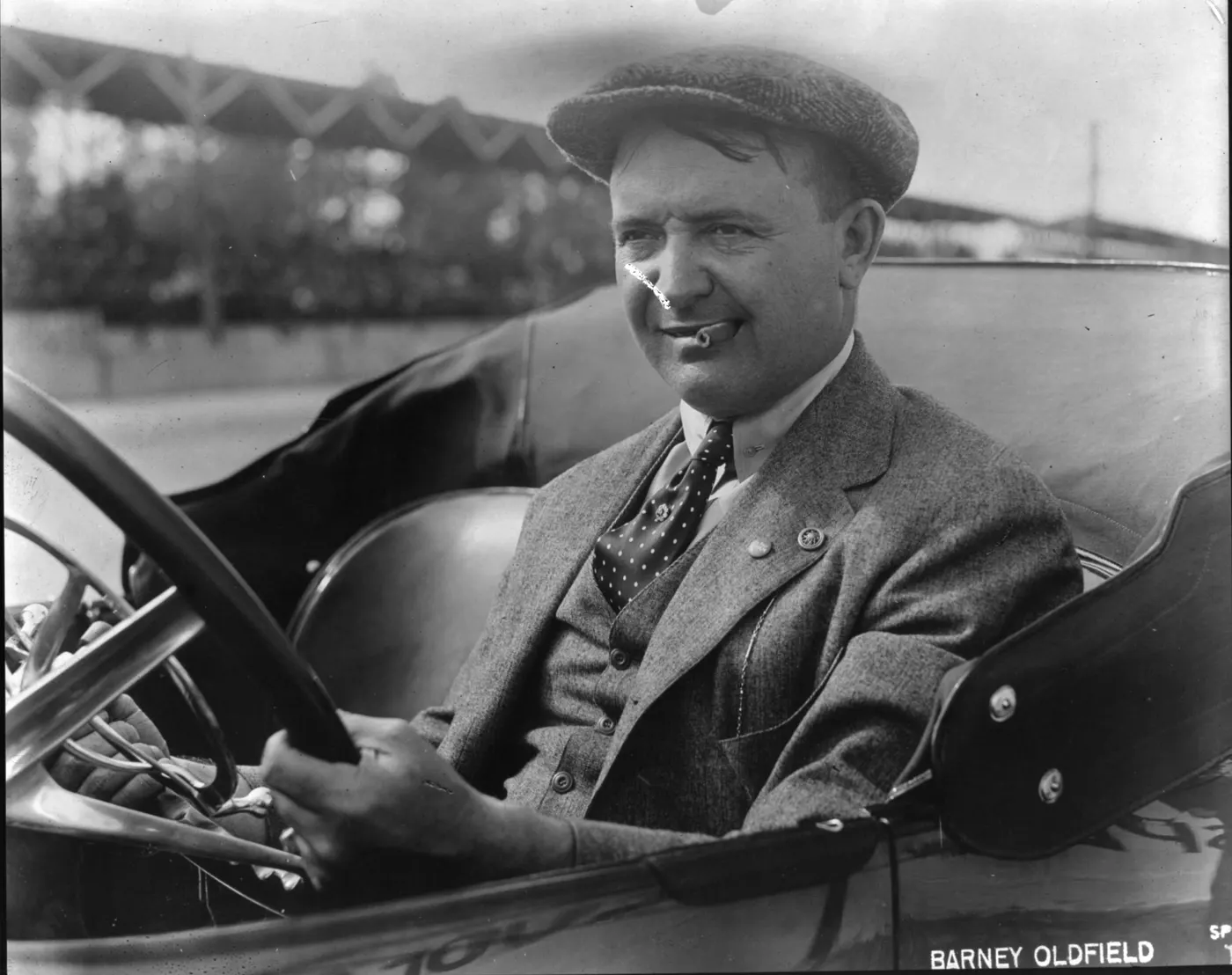
The man the traffic cops named
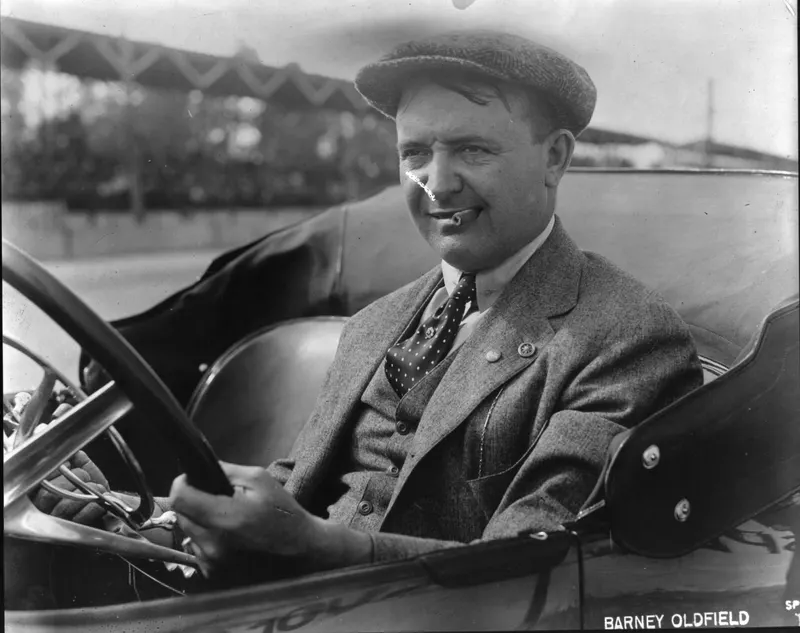
The brass era of the automobile is the early years, when headlamps really were brass and a fast car was still a public event. Barney Oldfield came out of that time. In 1903, at the Indiana state fairgrounds, he drove Henry Ford's 999 to a mile in a minute, the first widely credited sixty-mile-an-hour run on a circular track. The sentence people shouted after that, who do you think you are, Barney Oldfield, became what a traffic cop said to a speeder. The shop's photograph is later. It is Tacoma in 1920, from the Marvin D. Boland collection at the Tacoma Public Library. Oldfield is still the draw, years after the brass lamps had started to disappear, because the name had outlasted the hardware.
He raced hard enough that the cigar was a tool. He chewed it, the story goes with him, to cushion his teeth when a car broke. The 1920 picture does not need the crash stories to work. It needs the face of a man whose job was to be faster than the other man, in public, for a purse. Hang it as a portrait of a profession that was inventing itself.
Indianapolis, 1921
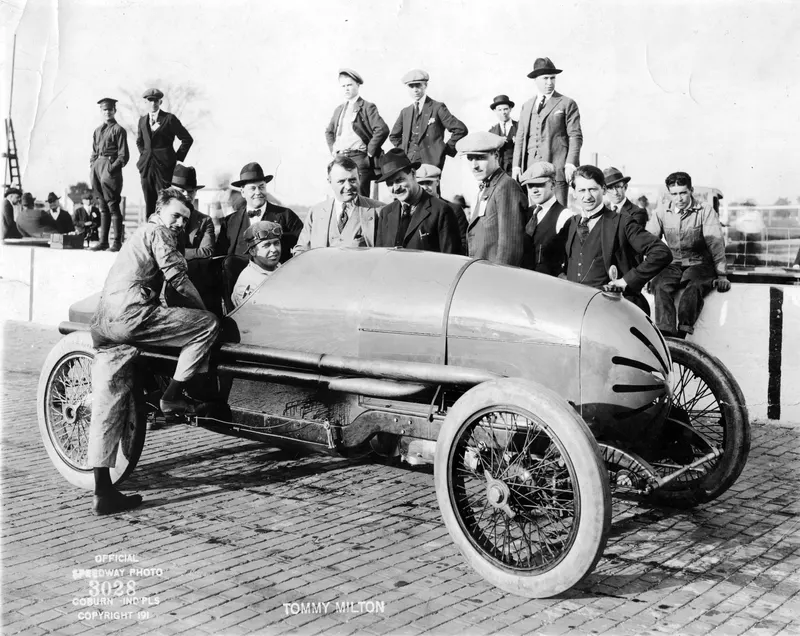
Tommy Milton won the Indianapolis 500 in 1921. The photograph in the shop is that season's picture of him. He won the race again in 1923, and those two victories made him the first driver to take the 500 twice. The 1921 frame is the first of those wins, a man at the start of the record, not at the end of it. He did the driving nearly blind in one eye, a fact he kept quiet for most of his career. The rule book of the day was still being written. Milton treated the eye as his own business and the stopwatch as everybody else's.
Put Milton beside Oldfield and you have two generations of the same idea. Oldfield was the fairgrounds hero who made sixty miles an hour a proverb. Milton was the speedway champion, on a track built for the purpose, in a race that already had a month on the calendar. The cars in 1921 were lower and more serious than the 999. The job was the same. Go around, go faster, come back with the trophy and the photograph. The Boland picture, the Indianapolis portrait, and the Cooley motorcycle are three public-domain frames of that same dare, a generation after the brass headlamps, when going too fast had become an ordinary way to spend a Sunday.
Somebody had to catch them
On July 4, 1922, Montgomery County, Maryland, started a police department. The first squad went out on motorcycles, because a horse was no longer the right answer to a county filling up with automobiles. The picture shows Charles T. Cooley with that mounted unit, July 1922, from the department's own early archive. Independence Day is a fine date to found a force whose first problem was speed. The people buying cars had been reading about Oldfield for twenty years.
Three pictures make the story complete. The racer who put a mile a minute into the language. The racer who won Indianapolis and came back to win it again. The officer whose motorcycle existed because both of them had succeeded. Brass lamps were fading by 1922. The habit of going too fast was not. That is the early speed era as a set of prints: a name, a trophy, and the law trying to keep up on two wheels.
Shop the story
No. 168 · Garage and Speed
Barney Oldfield, Tacoma 1920
Photographed by Marvin Dement Boland
From $29
No. 169 · Garage and Speed
Tommy Milton, Indy 500 Winner 1921
Photographed by Indianapolis Motor Speedway
From $29
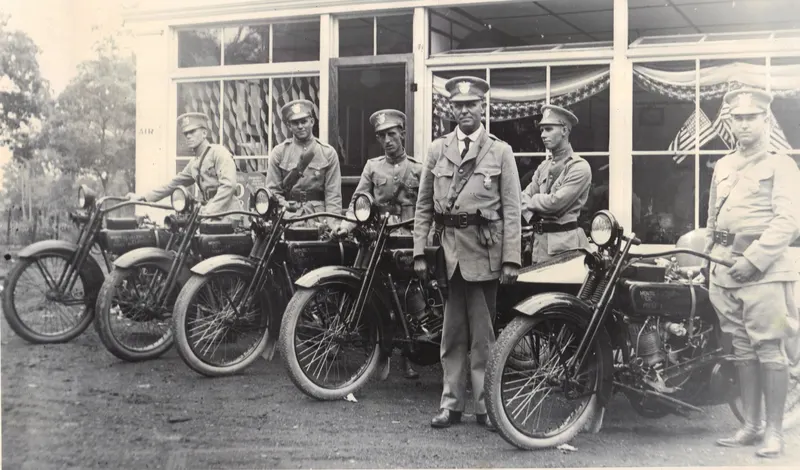
No. 170 · Garage and Speed
Motorcycle Police, July 4 1922
Photographed by Lewis Reed
From $149


